Monday, 25 March 2013

Organic Sales Still Dropping - What Will Restore Growth?


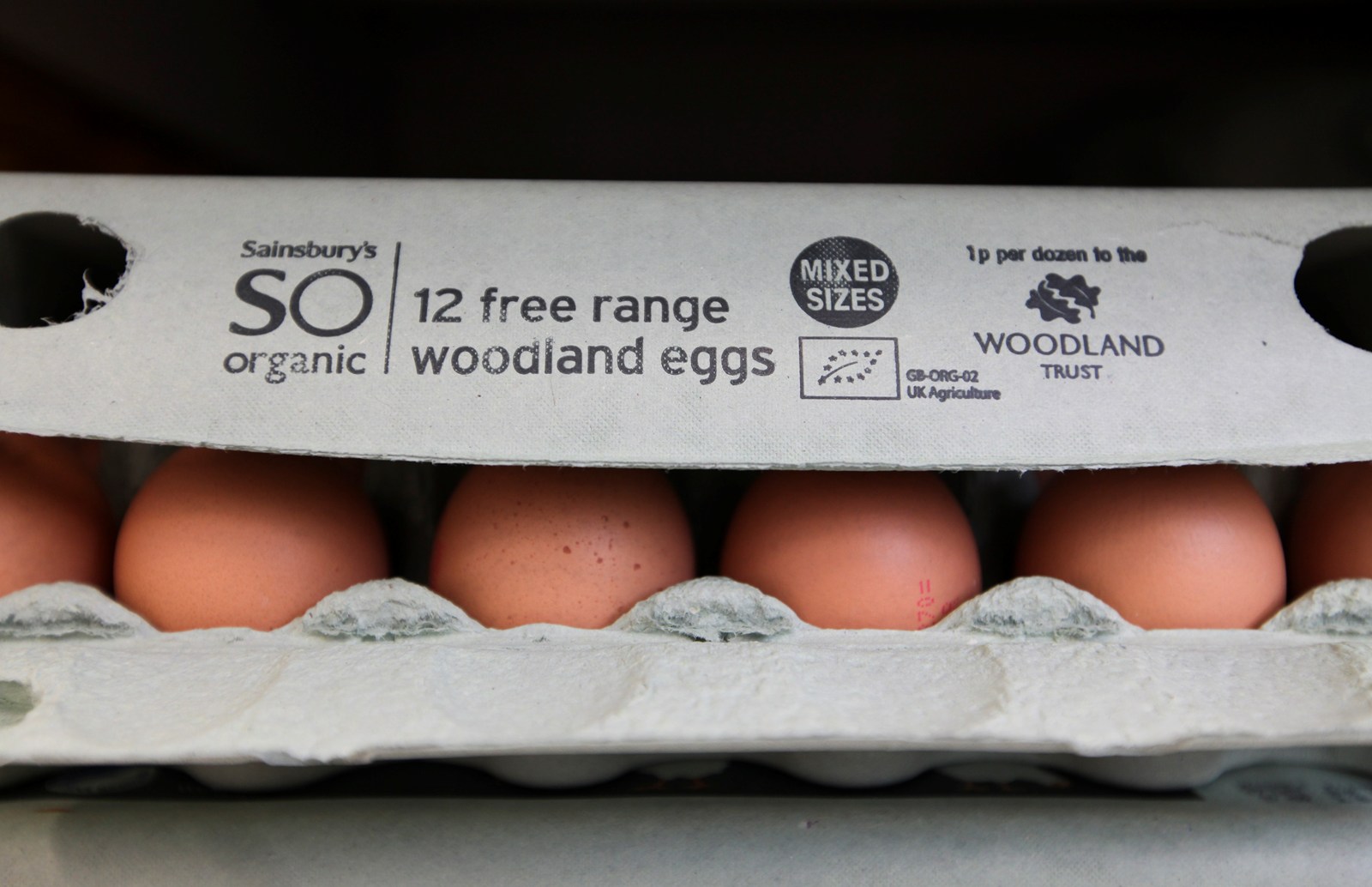
The Soil Association’s recently published Organic Market Report shows that sales of organic products fell by 1.5% in 2012.

There are pockets of strength, particularly where brands are well known and promoted. Combined sales of specialist retailers Ocado, Abel and Cole and Riverford Organics grew their sales by 10%.  Rachel’s Dairy, noted for its yoghurts, grew by 15% and Yeo Valley who sell a range of dairy products grew by 6.6%.

 Under 35’s spent more on organic products than ever before. Sales to catering outlets are up.

But some core markets still struggle. Supermarket sales of pork, eggs, and poultry dropped by 30%, horticulture products (fruit and veg) dropped by 8%, milk sales are down 4%, lamb down 2%, and beef down 1%.

So what of the future. The Soil Association admits that difficult economic circumstances have hindered organic sales and we know that money will be short for a few years yet.  And herein lies the problem. Whilst many consumers like the idea of buying organic, they struggle to convince themselves that the organic premium is worth paying on a regular basis.

This nettle has to be grasped if supporters of organic produce want to see sustained growth.

It is not enough for the Soil Association to chastise government for not doing enough and lambast the big multiple retailers for turning their back on organics.

The government cannot address the fundamental issue of consumer demand. Scotland’s Organic Action Plan, cited by the Soil Association as a template that the English government should follow, is helpful in that it provides support for farmers to convert to organic and makes funds available for businesses to promote their products. But the Scottish plan acknowledges that at the end of the day it is consumers who are key to success.

Multiple retailers are close to consumers but in a low growth, highly competitive environment they will not offer up precious shelf space to products whose sales don’t justify it.

There are just two ways to overcome the consumer issue. Either, communicate a compelling reason to justify the organic premium –or - reduce the premium.

The first route is difficult. The organic story is a complicated one to tell, and getting across the idea that organic is an integrated way of producing food is difficult when funds are limited and consumers are used to picking up messages in sound bites or in 140 characters on Twitter.

So is there any mileage in the second route, namely reduce the price premium. This would be ideal because many consumers like the idea of buying organic. Indeed some 80% do so, but too infrequently to affect growth.

Reducing the price premium requires increasing yields.  And to increase yields requires solid science, and science needs funding. At the moment there appears to be just one project tackling production issues – a Duchy Originals sponsored initiative led by the Soil Association with the help of the Organic Research Centre at Elm Farm. Whilst welcome, its progress will be slow. Starting May 2012, it is not due to complete its initial findings until May 2015. Only at this point will it decide on research priorities.

Here is the question. Would the considerable funds currently available across British governments, the EU, the Soil Association itself, the industry groups Organic UK and the Organic trade Board be better spent on broadening and speeding up scientific work.

This is not to overlook the task of communicating with consumers.This is probably most effective when done by strong, trusted brands. The success of Rachel's, Yeo Valley, and Riverford shows that when done well the organic story translates into solid sales growth.


Wednesday, 6 March 2013

Online Grocery Shopping - Supermarket Giant Morrisons View on the Challenges


Dalton Phillips, CEO of Morrisons, speaking on Radio 4 about his company’s future prospects, has given a clear analysis of the challenges food retailers face when considering going into online grocery shopping.

The basic problem, he says, is that when it comes to online, the mechanics involved in the cost of shopping transfer from the shopper to the supermarket.

The shopper going to a supermarket pays the time cost of going round the aisles loading products into the trolley, the time cost of wheeling the goods out to out to the car and loading up, and  the time and transport costs of getting the product home. Should the shopper arrive home with the wrong products they have to lump it – no getting on the phone or computer to complain that what they wanted has not arrived, no “goodwill” compensatory money changes hands to soothe disgruntlement.

Once the shopper orders on line all of those costs pass to the supermarket. The supermarket has to have the staff to process the order, pick the goods, load them onto the van, deliver to the customer’s house, deal with complaints. They have to buy or lease the vans, and bear the petrol and insurance costs of going around the country to deliver. We know from various industry studies that the cost of processing an on line order is about £15. Yet the shopper pays about £5, less if placing a big order.

Dalton Phillips point is that someone has to pick up the tab for all this additional cost, and none of the options is palatable. The competitive jungle that is the grocery sector means that costs cannot be passed back to shoppers in the form of higher prices. Equally, a hit to profit margins is unlikely to please investors.
What Dalton Phillips perhaps has not accepted is that embracing online grocery shopping means a structural and permanent change to the way profits are made by the grocery trade. At the moment online is a small part of supermarket sales, and so the profit drain is largely disguised, but this will change if the sector grows as predicted.

 Morrisons may not have much choice in whether or not they offer an online service. On line is something that today’s food shoppers want and to ignore the trend is to risk being sidelined, perhaps not today or tomorrow but certainly in the longer term. British retailing history is littered with examples of big businesses which ignored trends, got stuck in the past and collapsed. Comet, Jessops and Blockbuster spring to mind.

The challenge for Morrisons and any other business developing an online facility is to work out how to adjust business performance to take account of the reduced profit margin which comes from an online presence.

Friday, 1 March 2013

Horsemeat Scandal - Catering Trade Getting Off Too Lightly


It is the major retailers who have had the most opprobrium heaped on them in the horsemeat scandal. And this is fair enough given that most food bought comes from supermarkets. The adverse publicity has had an effect. The furore has led to a shift in sourcing policy from Tesco who have committed to closer working relationships with farmers. If Tesco delivers on their promises this can only be good for all in the food chain from farmer to consumers, and where they lead others will follow.

By contrast catering suppliers, those hundreds of thousands of premises who feed us outside of the home, have got off lightly . Even news of local authorities withdrawing meat fed to children has caused barely a ripple, yet up and down the country from fast food outlets like Burger King, through up market caterers like Sodexho who ironically supply Royal Ascot, Compass, one of the biggest catering companies in the world, IKEA with their restaurants claiming to provide family friendly meals, multi- national giant Whitbread who owns Brewer’s Fayre, Beefeater and Premier Inns,  and local authorities from Scotland to South west England, and across Wales have all had to change what they provide to customers because they were failing in their duty of care to those they are feeding
.
Every one of these companies and the local authorities has blamed their suppliers. No one has searched their consciences to see whether demands to save money or increase profits might have been a factor in things going so wrong.

Few will be punished. Assiduous followers of the scandal might defect from Burger King to McDonalds, who despite providing food at the lower price end of the spectrum seem to have emerged with their sourcing integrity intact. Families might avoid the meat balls in IKEA restaurants, for a day or two.

The rest of the catering trade will experience no adverse comeback because, with over 420,000 outlets, it is highly fragmented  and  largely uncontrolled. It is also has few recognised consumer brands so there is little for the media to get its teeth into and inflict reputational damage, as in the case of supermarkets.

So what can be done to ensure that caterers are serving what they purport to serve?

They could for starters be obliged to tell consumers at point of eating where the food comes from. People might think twice if the beef, bacon, or ham comes from anywhere but Britain.

The Food Standards Agency could focus their analyses on the catering trade, on the grounds that in the short term at least supermarkets will be bending over backwards to ensure that their supply chain is scandal free.

Local authorities could actually be local when it comes to sourcing the food they supply, much of which goes to the vulnerable – the very young or the old and sick.

Crusading foodie types could focus attention on the catering trade with as much vigour as they do the supermarkets.

And as for us , the general populace, we too could play a part as opposed to leaving it up to everyone else – and actually ask those supplying food when we eat out to give a full account of what they are serving to us.

What is served up in catering establishments does matter. We spend £48 billion on food and non alcoholic drinks consumed outside the home. £2.5bn is spent on food procurement by the public sector, most going to those who have little choice of eating establishment. The number of times we eat out is growing despite the recession.

Yet we have little reassurance if any as to the quality and provenance of the vast majority of the food we eat when away from home.


Friday, 15 February 2013

Horsemeat Scandal – Consumers Won’t pay More to Avoid Horse, Are Unlikely to Change Buying or Eating Habits


In the most illuminating piece of research yet done on the horsemeat scandal, a survey carried out between 11th and 13th February for respected industry journal The Grocer found that half of the consumers questioned are not prepared to pay any more for their meat to ensure it does not contain horse. Of the other half of the population, 35% were prepared to pay a bit more (around 10%) and 15% answered “don’t know”.

And while the specific question about who is to blame for the mess was not asked, we can probably conclude that the average person feels that it is retailers and their suppliers who caused the problem, and they should not expect the general public to pay to help them sort it out.

Further, the survey will disappoint those expecting a sudden big change in meat buying as a result of the scandal. Yes, 29% agreed they would buy more British meat, and 30% agreed they would shop more at the local butcher. But 41% said that the episode would not change their shopping or buying habits at all, and only 4 % thought they would change supermarkets as a result.

Despite screaming headlines and blanket media coverage, just 31% professed to be shocked by the horsemeat scandal, and 33% are “quite worried”. On the other hand 42% said they were not surprised by the news and only 18% felt that the food industry would get on top of the situation.

It takes alot to alarm British consumers and horsemeat being passed off as beef seems not to be causing much of a stir among the general public. It may have been different if horsemeat caused a health problem, but even at the height of the BSE scare where health was at risk, 30% of people made no change to their eating habits, according to Tim Lang, professor of food policy at City University.

Monday, 11 February 2013

How Consumers Decide What Meat to Buy


According to a recent piece of market research by EBLEX 23% of people are cutting back on the amount of meat they buy. This is not good news as a drop in demand tends to mean over supply and falling farmgate prices.

Conscious of the need to stimulate demand the EBLEX research goes on to analyse how people make their meat buying decisions and what levers can be pulled to encourage them to buy more. They interviewed 1200 shoppers in stores owned by the 4 main supermarkets.

Getting the meat purchase right is important to shoppers. They spend an average of 74 seconds at the meat fixture, considerably more than they did 10 years ago in a similar piece of research, and more than anywhere else in store apart from the veg counter.

EBLEX highlights the importance of appearance in the buying decision, and it is certainly true that appearance trumps price in most instances. If a piece of meat does not look right it will not be bought. Whilst the research does not go on to tell us what it is about appearance that matters we can guess that too much fat, an over watery look, flabby appearance, and too light or too dark are all flaws which are just not tolerated.

However we cannot dismiss the importance of price.

People are very price conscious. They buy on the price of the pack, not pence per kilo and of those questioned in the research 80% knew what they had paid for the product just bought. 35% of those questioned had bought products on promotion.

Some meat is more price sensitive than others. Pork is price sensitive, as is beef mince. Chicken legs and thighs are particularly price sensitive, and at the other end of the scale steak is too. There is clearly a price point over which people will not go however good looking the product.

The research confirms that meat purchase is not species specific. It indicates that 35% of people will change to an alternative if the species they first thought of is not available in the way they want it, compared with 30% who will change to another cut within a species. Decisions about roasting joints are especially fluid with 48% being prepared to change to another species.  17% will leave without buying anything if they cannot find exactly what they want.

This piece of work from EBLEX demonstrates that the meat buying decision is complex. Unsurprisingly in a category now so expensive that packs are security tagged people take their time over purchase. If something does not look right it will be rejected. If it is not priced right it will be rejected. If one species does not provide what is wanted then shoppers will in many cases move to an alternative. This is an important finding as it suggests that merely putting the price up in store and funneling the incremental back to the farm gate will not work, unless all species go up in price together, which is an unlikely event.
.
What is clear is that all parts of the food chain need to work closely together to deliver what the shopper wants. This represents a colossal communication challenge when according to DEFRA there are 86,000 beef farms, 73,000 sheep farms and 9,000 pig farms in the UK.


Wednesday, 23 January 2013

Horseburger Scandal - An Opportunity to Build Trust in British Farming?


Farmers Weekly has a poll this week asking who is to blame for the horseburger scandal. Of the 800 or so who have responded 55% say the processors,34% the retailers and 11% the food standards agencies.

It is difficult to allocate blame conclusively. Certainly processors are culpable because selling horse meat for human consumption is illegal in Britain.

Retailers should also be searching their consciences – is their pressure to get lowest prices leading to suppliers cutting corners so much that processes are by passed and unpleasant or even unsafe things happen. Tesco’s rush to blame their suppliers and adopt a stance of innocent victim was unedifying, and the fact that many of the major supermarkets cleared their shelves of frozen burgers mean that they also were not 100% sure that their meat was unaffected by the issue.

Some blamed consumers asking  –“ what did they think was in an ultra cheap burger?”.

It is the consumer position in the saga that deserves further analysis. What indeed did consumers think they were getting? The answer is that they trusted retailers to provide wholesome food regardless of price. That trust will now be severely shaken.

This is where British farming come into the picture. Who better to be the consumers champion and trusted ally when it comes to food. Who better to put forward a clear and transparent message to the effect that “Buy British and you know what you are eating”.

But we have been doing that for years some will cry. Well, no, we have not. To date the farming industry has only been playing at building Britishness.

Take the Red Tractor logo. It should stand for meat where the animal was born, raised and processed in Britain. It does not. Only the Red Tractor combined with the Union flag means British. The other logos mean that animals could come from anywhere.

Little money has been spent on educating consumers about why they should buy British and what they should look for to ensure that they do. Few have the knowledge to interpret food labels and those that do lack the time to get down to the miniscule print which details where the product was produced. Even the word produced is confusing. How many consumers realise that produced means born raised and slaughtered in the UK rather than raised elsewhere and packed over here?

An unequivocal logo would help as funds could then be put behind a clear, easily understood and instantly recognisable message.

Most of all, if a big push is made to gain consumers’ trust it must be backed by squeaky clean and stringent standards which are rigorously monitored.

Such a radical overhaul will only be achieved through strong, single minded leadership, and this is where the idealism starts to fall apart. There is no leader for British farming, no single voice to whom the public can listen, confident that they will hear truth.

The Red Tractor people seem oblivious to growing criticism about the relevance of the logo in its current form and are therefore unlikely to embrace a radical, standards raising agenda. The NFU is managing an already huge and largely defensive agenda as it aims to protect CAP subsidies, secure support for GM, and push for action to minimise TB in cattle. The levy bodies have funds to drive a consumer push but split interests across national lines (QMS in Scotland, HCC in Wales and EBLEX in England) prevent unity.

This fragmentation is in direct contrast to the retail trade which speaks with one voice through the British Retail Consortium, or, in the case of individual retailers has one figure, usually the Chief Executive who has just one objective, namely to protect his company image.

Transferral of trust to farmers could happen. A paper presented to this year’s Oxford Farming Conference suggests that the public are looking favourably at farmers just now, albeit with some reservations. The opportunity will be lost without focussed leadership.

Friday, 11 January 2013

Should Small Food Retailers Offer Online Shopping?


As the big supermarkets report Christmas sales much press comment has focused on online food shopping and what it has contributed to a successful Christmas performance.

First out of the blocks was Morrisons who have no online presence, saw sales drop by 2.5% over the Xmas period and were slated for not being online where all the growth is coming from.

Sainsbury reported sales up 0.9%, with online up 15%, a recovering Tesco reported sales up 1.8% with online up 18%.

On the other hand, Aldi with no online presence grew sales by 30% in the last twelve weeks and are reported to have had a highly successful Christmas trading due to offering specialist foods like goose.

More thoughtful commentators highlighted the online conundrum which is that it may be growing fast but it remains far less profitable than sales though shops. One estimate widely quoted is that it costs an additional £15 to fulfil an online order of around £70 - £80, yet the average price charged for delivery is around £3.50p.

One thing is clear – offering on line food shopping requires dedicated, sophisticated and therefore pricey technology, and expert staff to run it.

What are the facts?

Consumers are embracing on line grocery shopping. The this way of buying has grown at about 15% per annum and the IGD estimates that it will virtually double in size over the next 5 years. It is still small though. Worth around £5.6 billion today, it remains just 3.6% of total grocery sales.

The IGD could be underestimating the pace of change. Growth rates to date reflect a business in its infancy, which is still struggling to iron out wrinkles such as matching delivery slots to when consumers are at home, and  causing irritation by sending the wrong product, or an unwanted substitute product, or product with overly short shelf life left. Retailers are working very hard to resolve these issues.

On the shopper front, the pace of change could accelerate dramatically with the increased use of smartphones and tablets, and supply of easy to use apps which make the online shopping experience very simple and ultra convenient as it can be done anytime, anywhere. In the UK today 2 in 5 people own a smartphone and this goes up to 66% in the 16-24 age group and 60% for 25- 34 year olds. 46% of ABC1’s own a smartphone.

So, if one believes that online shopping will not go away, is an on line facility crucial? Without it will small retailers face a slow decline to oblivion? Is it better to retain customers rather than lose them, albeit at a lower margin than if they shop conventionally? Or,  is it better to invest the considerable sums of money required to set up and manage an online facility into another way of retaining customers.

Assuming that the basics of quality and value for money are in place, a good place to start might be to understand who your customers are, why they visit you, and critically, who is your competition. If your closest competitor is offering an online service then it would help to be clear about whether this is drawing customers away from you, and what your shop could offer that would trump this.

A customer profile which skews towards young families may mean an online facility will be welcomed, as IGD research published in June 2012 tells us that of the 24% who bought groceries on line in nearly half had children under 5. Conversely, just 13% of all those who purchased on line were over 65.

It is difficult to get away from the fact that developing an online offer will be expensive. There is no easy way to test whether it might be a successful venture without technological investment. Those retailers wrestling with costs might want to consider “click and collect” rather than home delivery. Whilst this is still a small part of online grocery shopping (Tesco said that 5% of their online business was done this way before Christmas) it is exploding in other sectors, offering as it does a saving in time for the shopper, and helps avoid having to wait in for delivery.

Finally, are there any examples of retail businesses who are making money from selling food online? The sceptics might quote Ocado, which sells only online and has not made any money in the 10+ years it has been going.

Optimists might point to  Riverford Organics the online veg box delivery service which grew profits to £1.36m in the year to end April 2012 on a turnover of £41.8m. Guy Watson, Riverford’s founder is clear that its success is not due to being organic, rather it is a combination of being local, working closely with farmer suppliers, some of whom have 7 year contracts, and above all being of the highest quality, something he and his team make sure of by regular taste tests versus competitive products.

Nevertheless, even Riverford with its 40,000 customers has suffered ups and downs in profit fortunes, although has not made losses. It does though show that retailing online can earn profit.

To conclude. Online shopping is here to stay. It probably does need to be seriously considered and costed, particularly for specialist outlets.